スペイン語: ¡El Revolucionario del Tango! Historia, Miembros y Obras de la Orquesta de Osvaldo Pugliese
英語: The Revolutionary of Tango! Osvaldo Pugliese Orchestra History, Members & Representative Works
日本語: タンゴの革命家!プグリエーセ楽団の歴史・メンバー・代表曲
👑 オスバルド・プグリエーセとは?
日本語
オスバルド・プグリエーセ(1905年12月2日〜1995年7月25日)は「エル・ビエホ(老人)」と愛称で呼ばれたアルゼンチンタンゴ界の革命家です。ピアニスト・作曲家・楽団指揮者として、タンゴの黄金期から現代まで約70年にわたり活躍し続けました。
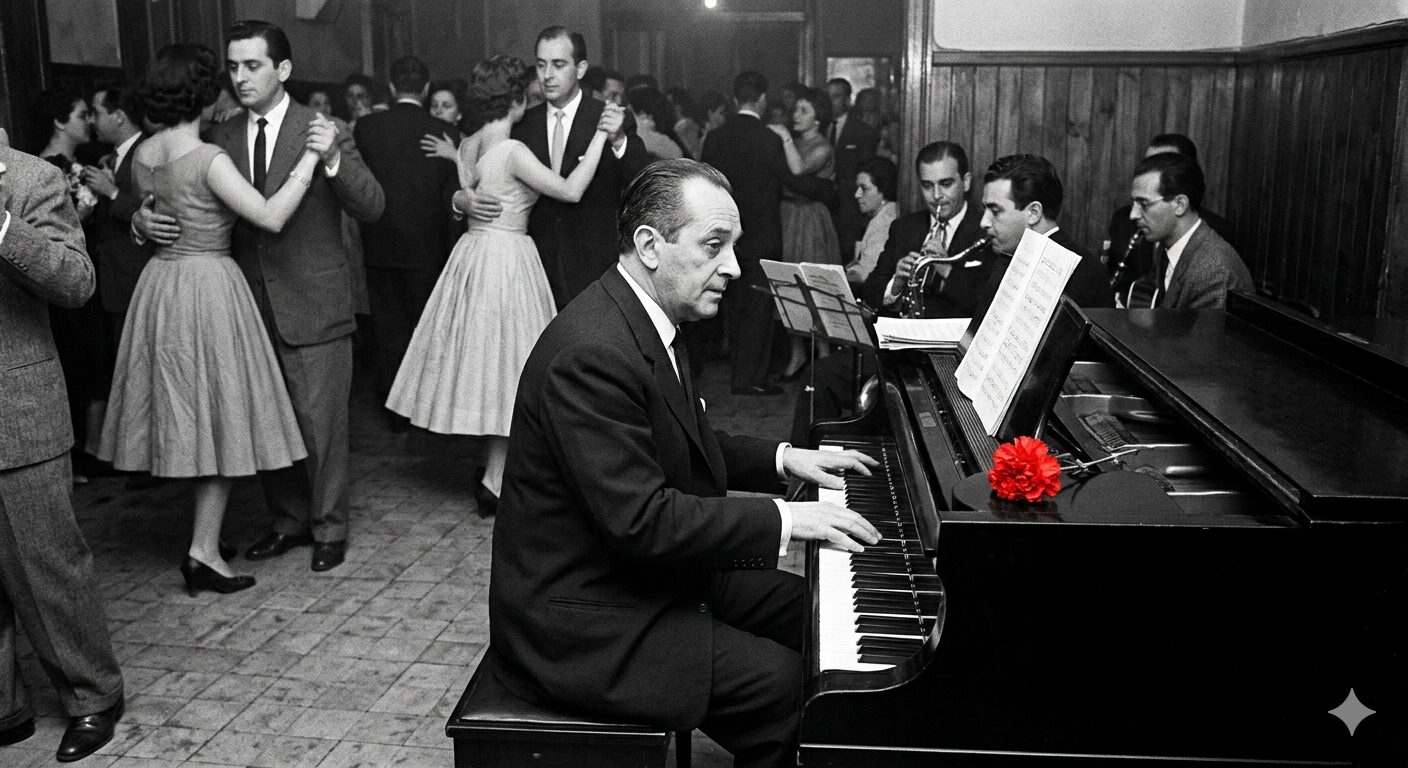
共産党員であったため、度重なる政治的弾圧を受けながらも音楽への情熱を貫き続けた、強靭な精神の持ち主でもありました。ステージにはいつも赤いカーネーションを置き、政治犯として収監された仲間への連帯の象徴としました。
English
Osvaldo Pugliese (December 2, 1905 – July 25, 1995), affectionately known as “El Viejo” (The Old Man), was a revolutionary figure in Argentine Tango. As a pianist, composer, and orchestra leader, he remained active for nearly 70 years, from the Golden Age of Tango through to the modern era.
A committed Communist Party member, Pugliese faced repeated political persecution but never abandoned his passion for music. He always placed a red carnation on stage as a symbol of solidarity with his politically imprisoned comrades.
Español
Osvaldo Pugliese (2 de diciembre de 1905 – 25 de julio de 1995), conocido cariñosamente como “El Viejo”, fue una figura revolucionaria en el Tango Argentino. Como pianista, compositor y director de orquesta, permaneció activo durante casi 70 años. Miembro del Partido Comunista, Pugliese enfrentó repetidas persecuciones políticas pero nunca abandonó su pasión por la música.
📅 年表 / Chronology / Cronología
日本語
- 1905年12月2日 ブエノスアイレス・ビジャ・デル・パルケに誕生
- 1920年代 ピアニストとして各楽団で活躍
- 1939年 自身の楽団を結成
- 1943年 カフェ・レトワール・デル・スールでの演奏で名声を確立
- 1940〜1950年代 タンゴ黄金期に数々の名曲を録音
- 1950年代 共産党員として政治的弾圧を受け度々収監される
- 1960年代 タンゴ衰退期も活動を継続
- 1985年 ブエノスアイレス市名誉市民に選出
- 1995年7月25日 ブエノスアイレスにて逝去。享年89歳
English
- December 2, 1905 Born in Villa del Parque, Buenos Aires
- 1920s Active as pianist in various orchestras
- 1939 Forms his own orchestra
- 1943 Establishes reputation at Café Llotar del Sur
- 1940s-1950s Records numerous masterpieces during the Golden Age
- 1950s Faces political persecution as Communist Party member
- 1960s Continues activities despite tango’s decline
- 1985 Named Honorary Citizen of Buenos Aires
- July 25, 1995 Passes away in Buenos Aires at age 89
Español
- 2 de diciembre de 1905 Nace en Villa del Parque, Buenos Aires
- 1920s Activo como pianista en varias orquestas
- 1939 Forma su propia orquesta
- 1943 Establece su reputación en el Café Llotar del Sur
- 1940s-1950s Graba numerosas obras maestras durante la Época de Oro
- 1950s Enfrenta persecución política como miembro del Partido Comunista
- 1960s Continúa activo a pesar del declive del tango
- 1985 Nombrado Ciudadano Ilustre de Buenos Aires
- 25 de julio de 1995 Fallece en Buenos Aires a los 89 años
🎹 音楽的特徴 / Musical Characteristics / Características Musicales
日本語
プグリエーセの音楽の最大の特徴は「ラ・ヤンバ」と呼ばれる独特のリズムです。強いアクセントと劇的な表現が組み合わさり、他の楽団にはない独自の世界観を生み出しています。
また「アラストレ」と呼ばれる引きずるような独特の演奏スタイルも特徴的で、重厚で深みのある音楽はダンサーに強烈な印象を与えます。プグリエーセの音楽はタンゴの中でも最も演奏が難しいとされており、上級ダンサーに特に愛されています。
English
The most distinctive feature of Pugliese’s music is the unique rhythm called “La Yumba.” The combination of strong accents and dramatic expression creates a world unlike any other orchestra. The “arrastrando” (dragging) style of playing is also characteristic, giving his music a heavy, deep quality that leaves a powerful impression on dancers.
Español
La característica más distintiva de la música de Pugliese es el ritmo único llamado “La Yumba.” La combinación de fuertes acentos y expresión dramática crea un mundo único. El estilo “arrastrando” también es característico, dando a su música una calidad pesada y profunda.
🎤 ボーカリストの変遷 / Vocalists
日本語
| 期間 | ボーカリスト | 特徴 |
|---|---|---|
| 1940年代 | ロベルト・チャネル | 楽団初期の代表的歌手 |
| 1940年代 | Jorge Vidal | 力強い歌声 |
| 1950年代 | Alberto Morán | 最多録音・楽団を代表する歌声 |
| 1950年代 | Miguel Montero | 情感豊かな表現力 |
| 1960年代以降 | Jorge Maciel | 晩年の楽団を支えた名歌手 |
English
| Period | Vocalist | Feature |
|---|---|---|
| 1940s | Roberto Chanel | Representative singer of early period |
| 1940s | Jorge Vidal | Powerful vocals |
| 1950s | Alberto Morán | Most recordings, representative voice |
| 1950s | Miguel Montero | Rich emotional expression |
| 1960s+ | Jorge Maciel | Distinguished singer of later years |
Español
| Período | Vocalista | Característica |
|---|---|---|
| 1940s | Roberto Chanel | Cantante representativo del período inicial |
| 1940s | Jorge Vidal | Voz poderosa |
| 1950s | Alberto Morán | Más grabaciones, voz representativa |
| 1950s | Miguel Montero | Rica expresión emocional |
| 1960s+ | Jorge Maciel | Distinguido cantante de los últimos años |
🎵 代表曲 / Representative Works / Obras Representativas
日本語
| 曲名 | 種類 | 特徴 |
|---|---|---|
| La Yumba | 器楽 | プグリエーセの代名詞・最高傑作 |
| Recuerdo | 器楽 | 哀愁漂う美しいメロディー |
| Nochero Soy | Alberto Morán | 夜の孤独を歌った名曲 |
| Corazón de Oro | Alberto Morán | 黄金の心を持つ女性への賛歌 |
| Gallo Ciego | 器楽 | 力強いリズムが印象的 |
| Desde el Alma | 器楽 | 魂の底から響く美しい旋律 |
English
| Song Title | Type | Feature |
|---|---|---|
| La Yumba | Instrumental | Pugliese’s signature masterpiece |
| Recuerdo | Instrumental | Beautiful melancholic melody |
| Nochero Soy | Alberto Morán | Masterpiece about nocturnal solitude |
| Corazón de Oro | Alberto Morán | Ode to a golden-hearted woman |
| Gallo Ciego | Instrumental | Powerful and impressive rhythm |
| Desde el Alma | Instrumental | Beautiful melody resonating from the soul |
Español
| Título | Tipo | Característica |
|---|---|---|
| La Yumba | Instrumental | Obra maestra característica de Pugliese |
| Recuerdo | Instrumental | Hermosa melodía melancólica |
| Nochero Soy | Alberto Morán | Obra maestra sobre la soledad nocturna |
| Corazón de Oro | Alberto Morán | Oda a una mujer de corazón dorado |
| Gallo Ciego | Instrumental | Ritmo poderoso e impresionante |
| Desde el Alma | Instrumental | Hermosa melodía que resuena desde el alma |
🌹 赤いカーネーションの伝説 / The Legend of the Red Carnation
日本語
プグリエーセが演奏中に収監されると、楽団員たちは指揮者不在のままステージに赤いカーネーションを置いて演奏を続けました。これはプグリエーセへの連帯と敬意の表れでした。
この伝統は現在も続いており、プグリエーセの音楽が演奏される時には赤いカーネーションが置かれることがあります。タンゴファンの間では「プグリエーセの呪い」という言葉があり、ミロンガの最後にプグリエーセの曲をかけると何かが起こるというジンクスも語り継がれています。
English
When Pugliese was imprisoned during performances, his orchestra members would place a red carnation on stage and continue playing without their conductor — a symbol of solidarity and respect. This tradition continues today. Among tango fans, there is a saying called “The Pugliese Curse” — that playing Pugliese’s music at the end of a milonga will cause something unexpected to happen.
Español
Cuando Pugliese era encarcelado durante las actuaciones, los miembros de su orquesta colocaban un clavel rojo en el escenario y continuaban tocando sin su director. Esta tradición continúa hoy. Entre los fanáticos del tango, existe un dicho llamado “La Maldición de Pugliese.”
💃 ダンサーへのメッセージ / Message for Dancers
日本語
プグリエーセの音楽は「上級者向け」と言われることがありますが、その重厚なリズムと劇的な表現は一度体験すると忘れられない感動を与えてくれます。特にLa Yumbaは、ミロンガで流れると会場全体が一瞬緊張感に包まれる、タンゴ界屈指の名曲です。
ぜひプグリエーセの音楽とともに、タンゴの深淵な世界を体験してください。
English
Pugliese’s music is often described as “advanced,” but once you experience its powerful rhythm and dramatic expression, it leaves an unforgettable impression. La Yumba in particular creates a moment of electrifying tension across the entire milonga when it plays — it is truly one of tango’s greatest masterpieces.
Español
La música de Pugliese a menudo se describe como “avanzada”, pero una vez que experimenta su poderoso ritmo y expresión dramática, deja una impresión inolvidable. La Yumba en particular crea un momento de tensión electrizante en toda la milonga cuando suena.

コメント