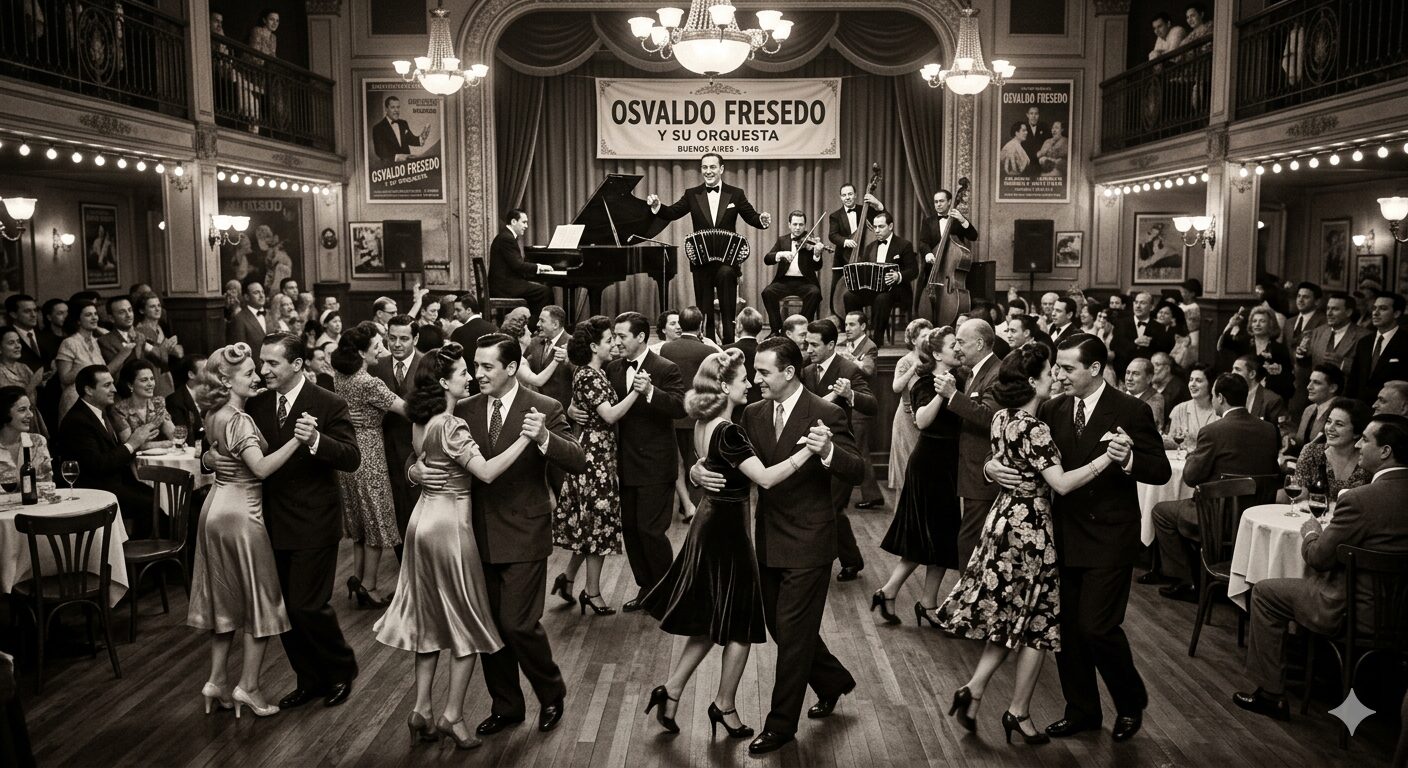
Master of Elegance! Osvaldo Fresedo Orchestra History, Members & Representative Works
日本語: エレガンスの巨匠!フレセド楽団の歴史・メンバー・代表曲
¡Maestro de la Elegancia! Historia, Miembros y Obras de la Orquesta de Osvaldo Fresedo
フレセド楽団の紹介〜ラ・パテルナルの少年・エレガンスの巨匠〜
Osvaldo Fresedo Orchestra ~El Pibe de La Paternal, Master of Elegance~
La Orquesta de Osvaldo Fresedo ~El Pibe de La Paternal, Maestro de la Elegancia~
👑 オスバルド・フレセドとは?
日本語
オスバルド・ニコラス・フレセド(1897年5月5日〜1984年11月18日)は「エル・ピベ・デ・ラ・パテルナル(ラ・パテルナルの少年)」という愛称で親しまれたアルゼンチンタンゴ界のバンドネオン奏者・作曲家・楽団指揮者です。 LETRAS
フレセドの音楽的経歴は63年にわたり1,250曲以上の録音を残した、タンゴ史上最も長いキャリアを持つ指揮者のひとりです。 Wikipedia
1920年代半ばにはフレセドとフリオ・デ・カロがその時代の最も偉大な楽団指揮者として並び称され、タンゴを中産階級と上流階級に浸透させた立役者でした。 Tango-origin
1927年にはフレセドは5つの楽団を同時に維持するほどの大成功を収めており、主要楽団はコリエンテス通りのタバリスで演奏していました。 LETRAS
English
Osvaldo Nicolás Fresedo (May 5, 1897 – November 18, 1984), nicknamed “El Pibe de La Paternal” (The Kid from La Paternal), was an Argentine tango bandoneonist, composer, and orchestra leader. LETRAS His musical career spanned 63 years, leaving behind over 1,250 recordings — one of the longest careers in tango history. Wikipedia
Español
Osvaldo Nicolás Fresedo (5 de mayo de 1897 – 18 de noviembre de 1984), apodado “El Pibe de La Paternal”, fue un bandoneonista, compositor y director de orquesta de tango argentino. LETRAS Su carrera musical abarcó 63 años, dejando más de 1.250 grabaciones. Wikipedia
📅 年表 / Chronology / Cronología
日本語
- 1897年5月5日 ブエノスアイレスに誕生
- 1914年 カフェ・パウリンで初舞台
- 1916年 ロイヤル・ピガルでフランシスコ・カナロらと共演
- 1917年 カーニバルの「フィルポ=カナロ」楽団に参加
- 1918年 最初の楽団を結成
- 1920年 米国に渡りニュージャージー州カムデンで録音
- 1921年 ブエノスアイレスに帰国し楽団を再編成
- 1925年 カルロス・ガルデルと「ペルドン・ビエヒタ」「フェア」を録音
- 1927年 5つの楽団を同時に運営するほどの大成功
- 1930年代 楽団を拡大・アルパやビブラフォンを導入
- 1940年代 新世代の楽団の台頭に対応し音楽スタイルを更新
- 1960年 楽団を一時解散
- 1980年 CBSレーベルでの録音を最後に引退
- 1984年11月18日 ブエノスアイレスにて逝去。享年87歳
English
- May 5, 1897 Born in Buenos Aires
- 1914 First performance at Café Paulín
- 1916 Performs with Francisco Canaro at Royal Pigall
- 1918 Forms his first orchestra
- 1920 Travels to USA, records in Camden, New Jersey
- 1921 Returns to Buenos Aires, reorganizes orchestra
- 1925 Records with Carlos Gardel
- 1927 Achieves such success he runs 5 orchestras simultaneously
- 1930s Expands orchestra, introduces harp and vibraphone
- 1940s Updates musical style in response to new generation
- 1960 Temporarily dissolves orchestra
- 1980 Final recordings with CBS label
- November 18, 1984 Passes away in Buenos Aires at age 87
Español
- 5 de mayo de 1897 Nace en Buenos Aires
- 1914 Primera actuación en el Café Paulín
- 1916 Actúa con Francisco Canaro en el Royal Pigall
- 1918 Forma su primera orquesta
- 1920 Viaja a EE.UU., graba en Camden, Nueva Jersey
- 1925 Graba con Carlos Gardel
- 1927 Dirige 5 orquestas simultáneamente
- 1930s Expande la orquesta, incorpora arpa y vibráfono
- 1980 Últimas grabaciones con CBS
- 18 de noviembre de 1984 Fallece en Buenos Aires a los 87 años
🎻 音楽的特徴 / Musical Characteristics
日本語
フレセドの音楽スタイルは「繊細な趣味、レガート奏法、柔らかいニュアンス、幻想的なピアノソロが上流階級の耳を魅了しながらも、深いアラバルの音楽的メッセージを届けるもの」と評されています。 LETRAS
フレセドはアルパやビブラフォンなどの新しい楽器を革新的に導入し、楽団に独自の色彩を与えました。歌手は常に良趣味で選ばれ、楽団のスタイルと絶妙に調和していました。 LETRAS
楽団員と歌手は厳格なフラックを着用して本格的なコンサートを行い、タンゴの歌詞からルンファルドや暴力的な表現を排除し、ロマンティックな愛の物語のみを歌うという高い美的基準を持っていました。 Tango-origin
English
Fresedo’s musical style was characterized by “delicacy of taste, legato playing, soft nuances, and fantastical piano solos that appealed to the upper classes, while always carrying the deep musical message of the arrabal.” LETRAS He innovatively incorporated new instruments such as the harp and vibraphone, giving the orchestra a unique color. Singers were always chosen with refined taste to harmonize perfectly with the orchestra’s style. LETRAS
Español
El estilo musical de Fresedo se caracterizó por “la delicadeza del gusto, los ligados, los suaves matices y los solos fantaseosos del piano que apuntaban al oído de las clases altas, llevando hasta ellas el mensaje musical del arrabal profundo.” LETRAS
🎤 ボーカリストの変遷 / Vocalists
日本語
| 期間 | ボーカリスト | 特徴 |
|---|---|---|
| 1920年代 | エルネスト・ファマ | 初期の人気歌手 |
| 1930〜40年代 | ロベルト・レイ | 最も象徴的な歌手・甘い美声 |
| 1930年代 | リカルド・ルイス | 情感豊かな表現力 |
| 1940年代 | オスカル・セルパ | 深みのある歌声 |
| 1940〜50年代 | アルマンド・ガリード | 洗練された表現力 |
| 1950〜60年代 | エクトル・パチェコ | 晩年の楽団を支えた名歌手 |
English
| Period | Vocalist | Feature |
|---|---|---|
| 1920s | Ernesto Famá | Popular early vocalist |
| 1930-40s | Roberto Ray | Most iconic vocalist, sweet beautiful voice |
| 1930s | Ricardo Ruiz | Rich emotional expression |
| 1940s | Oscar Serpa | Deep resonant voice |
| 1940-50s | Armando Garrido | Refined expressive style |
| 1950-60s | Héctor Pacheco | Distinguished singer of later years |
Español
| Período | Vocalista | Característica |
|---|---|---|
| 1920s | Ernesto Famá | Popular vocalista inicial |
| 1930-40s | Roberto Ray | El más icónico, voz dulce y hermosa |
| 1930s | Ricardo Ruiz | Rica expresión emocional |
| 1940s | Oscar Serpa | Voz profunda y resonante |
| 1940-50s | Armando Garrido | Estilo expresivo refinado |
| 1950-60s | Héctor Pacheco | Distinguido cantante de los últimos años |
🎵 代表曲 / Representative Works
日本語
| 曲名 | 種類 | 特徴 |
|---|---|---|
| Vida mía | ロベルト・レイ | フレセドの代名詞的名曲 |
| Islas de Capri | ロベルト・レイ | 優雅さの極致 |
| Como una princesa | ロベルト・レイ | レイとのコンビの傑作 |
| Pimienta | 器楽 | フレセド作曲の器楽代表作 |
| El espiante | 器楽 | フレセド最初期の作品 |
| Sollozos | 器楽 | 哀愁漂う美しいメロディー |
English
| Song Title | Type | Feature |
|---|---|---|
| Vida mía | Roberto Ray | Fresedo’s signature masterpiece |
| Islas de Capri | Roberto Ray | The pinnacle of elegance |
| Como una princesa | Roberto Ray | Masterpiece with Ray |
| Pimienta | Instrumental | Representative instrumental composition |
| El espiante | Instrumental | Fresedo’s earliest composition |
| Sollozos | Instrumental | Beautiful melancholic melody |
Español
| Título | Tipo | Característica |
|---|---|---|
| Vida mía | Roberto Ray | Obra maestra característica de Fresedo |
| Islas de Capri | Roberto Ray | La cúspide de la elegancia |
| Como una princesa | Roberto Ray | Obra maestra con Ray |
| Pimienta | Instrumental | Composición instrumental representativa |
| El espiante | Instrumental | Primera composición de Fresedo |
| Sollozos | Instrumental | Hermosa melodía melancólica |
🌍 カルロス・ディ・サルリとの師弟関係 / Connection with Carlos Di Sarli
日本語
1927年、フレセドが5つの楽団を同時に運営していた頃、そのひとつであるフローレスのシネ・フェニックスでピアノを弾いていたのが若きカルロス・ディ・サルリでした。後に「タンゴの紳士」として世界的な名声を得たディ・サルリは、フレセドの影響を強く受けて自身のスタイルを確立しました。 LETRAS
English
In 1927, when Fresedo was running five orchestras simultaneously, one of them — performing at the Cine Fénix in Flores — was directed from the piano by none other than the young Carlos Di Sarli. The future “Gentleman of Tango” would go on to develop his own legendary style strongly influenced by Fresedo. LETRAS
Español
En 1927, cuando Fresedo dirigía cinco orquestas simultáneamente, una de ellas — actuando en el Cine Fénix de Flores — era dirigida desde el piano por el joven Carlos Di Sarli, quien desarrollaría su propio estilo legendario fuertemente influenciado por Fresedo. LETRAS
💃 ダンサーへのメッセージ / Message for Dancers
日本語
フレセドの音楽はタンゴの中でも特にエレガントで洗練されたスタイルを持っています。上流階級のサロンで演奏されたフレセドの音楽は、タンゴを芸術として昇華させた存在です。 Tango-origin特にVida míaやSollozosはミロンガで流れると、会場全体が優雅なロマンティシズムに包まれる定番曲です。ロベルト・レイの甘い歌声とともに、フレセドの繊細な音楽世界を体全体で表現してください。
English
Fresedo’s music holds a uniquely elegant and refined place in tango. Performed in the grand salons of Buenos Aires for the upper classes, Fresedo’s music elevated tango to the level of art. Tango-origin Vida mía and Sollozos in particular are classics that wrap the entire milonga in graceful romanticism when played. Let Roberto Ray’s sweet vocals guide you as you express Fresedo’s delicate musical world through your whole body.
Español
La música de Fresedo ocupa un lugar único de elegancia y refinamiento en el tango. Interpretada en los grandes salones de Buenos Aires para las clases altas, la música de Fresedo elevó el tango al nivel del arte. Tango-origin Vida mía y Sollozos son clásicos que envuelven toda la milonga en un romántico gracioso cuando suenan.
コメント