Enrique Rodríguez / Armando Moreno(1940年)
🎵 曲の説明 / About the Song / Sobre la Canción
日本語
「Danza Maligna(邪悪なダンス)」は作曲フェルナンド・ランドル、作詞クラウディオ・フロッロによる名曲で、1940年7月31日にエンリケ・ロドリゲス楽団がアルマンド・モレーノの歌声で録音しました。 Argentina.gob.ar
この曲は1929年にアスセナ・マイサニが初めて録音した作品で、その後インペリオ・アルヘンティーナ、フランシスコ・ロムート、エドガルド・ドナートなど多くの楽団がカバーしました。しかし今日のダンサーたちに最もよく知られているのはロドリゲス=モレーノによる1940年の録音です。 cmtv.com.ar
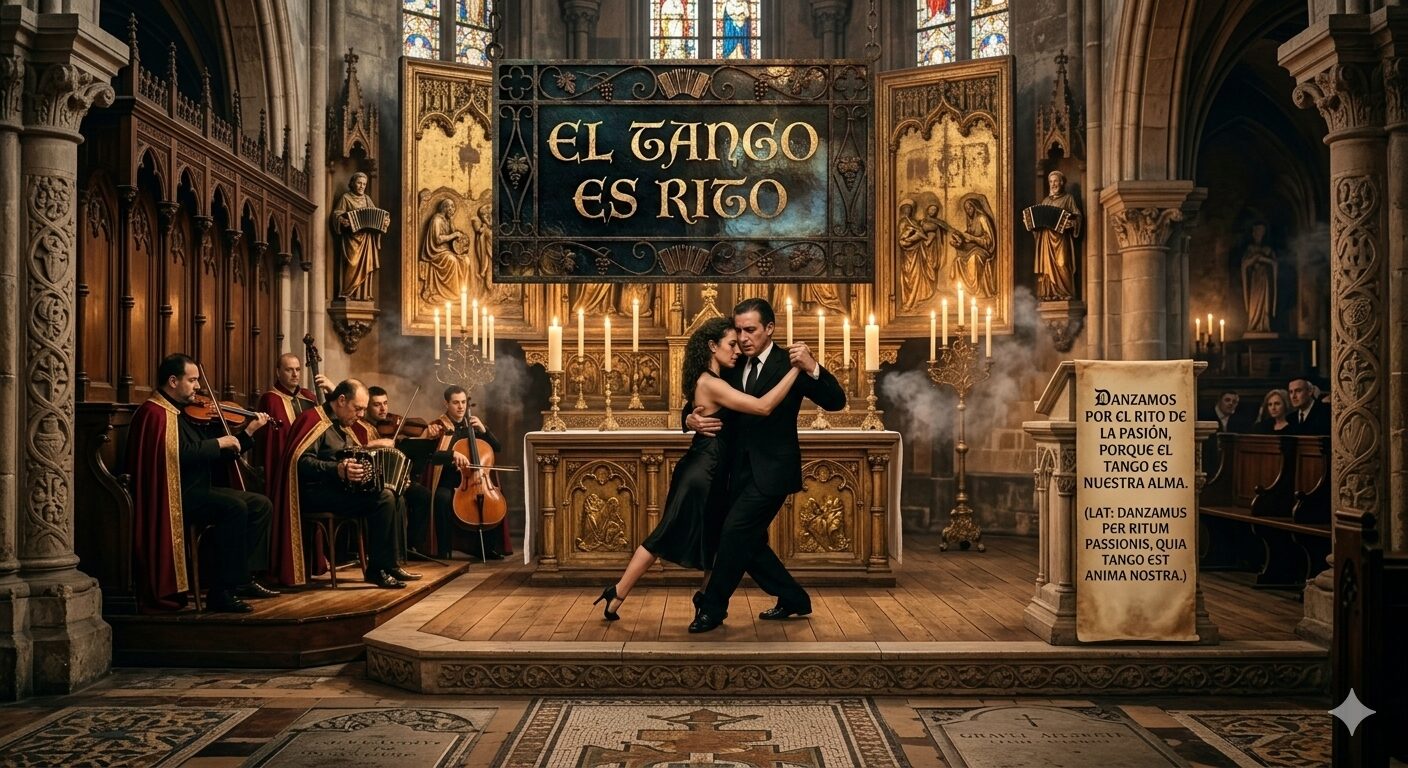
「Danza Maligna」はタンゴそのものを宗教的かつ官能的に讃えた独特の世界観を持つ作品です。タンゴを「神々の喜び」「倒錯したダンス」「儀式であり宗教」と表現し、バンドネオンを「司祭」に例えたこの詩は、タンゴの本質を最も詩的に表現した作品のひとつとして語り継がれています。 Todo Argentina
English
“Danza Maligna” (Evil/Malignant Dance) was composed by Fernando Randle with lyrics by Claudio Frollo, and recorded by Enrique Rodríguez’s orchestra with Armando Moreno’s vocals on July 31, 1940. Argentina.gob.ar
First recorded by Azucena Maizani in 1929, the song was later covered by many orchestras including Imperio Argentina, Francisco Lomuto, and Edgardo Donato. However, the Rodríguez-Moreno recording of 1940 is the version most beloved by dancers today. cmtv.com.ar
“Danza Maligna” carries a unique vision that celebrates tango itself in a religious and sensual way — describing tango as “the pleasure of the gods,” “perverse dancing,” and “both ritual and religion,” with the bandoneón as its “high priest.” It remains one of the most poetically powerful expressions of tango’s essence. Todo Argentina
Español
“Danza Maligna” fue compuesto por Fernando Randle con letra de Claudio Frollo, y grabado por la orquesta de Enrique Rodríguez con la voz de Armando Moreno el 31 de julio de 1940. Argentina.gob.ar
👤 作詞家クラウディオ・フロッロについて / About Claudio Frollo
日本語
クラウディオ・フロッロは「カルロス・アトウェル・オカンポス」という判事(予審判事)の筆名でした。法律専門家としての本業を持ちながら、多くのタンゴの詩を書き成功を収めました。タンゴを愛し、当時流行していたキャバレーにできるだけ目立たないように通い続けたという伝説が残っています。 Todo Argentina
フロッロの代表作には「Danza Maligna」の他に「Sólo se quiere una vez」(カルロス・ガルデルが録音)、「Escúchame Manón」(プグリエーセ版が有名)などがあります。 Todo Argentina
English
Claudio Frollo was the pen name of Carlos Attwell Ocampos, a judge (examining magistrate) who maintained a successful legal career while writing numerous popular tango lyrics. He was a passionate tango lover who frequented the fashionable cabarets of his era, trying to pass as unnoticed as possible. His other notable works include “Sólo se quiere una vez” (recorded by Carlos Gardel) and “Escúchame Manón” (famous in the Pugliese version). Todo ArgentinaTodo Argentina
Español
Claudio Frollo fue el seudónimo de Carlos Attwell Ocampos, un juez de instrucción que mantuvo una exitosa carrera legal mientras escribía numerosas letras de tango populares. Era un apasionado del tango que frecuentaba los cabarets de moda de su época. Todo Argentina
👤 アルマンド・モレーノについて / About Armando Moreno
日本語
アルマンド・モレーノ(本名アルマンド・オレンシオ・バッシ・マリアネッティ)はロドリゲス楽団の黄金期を支えた最も人気のある歌手です。1940年5月22日に楽団に加入し、1953年まで在籍して多くの名録音を残しました。明るく親しみやすい歌声と優れた技術で「青年の楽団」と呼ばれたロドリゲス楽団のイメージを作り上げた存在です。
English
Armando Moreno (real name Armando Orencio Bassi Marianetti) was the most popular vocalist of Rodríguez’s golden era. Joining the orchestra on May 22, 1940 and remaining until 1953, he left behind many legendary recordings. His bright, accessible voice and excellent technique helped create the “orchestra of the youth” image that defined Rodríguez’s orchestra.
Español
Armando Moreno (nombre real Armando Orencio Bassi Marianetti) fue el vocalista más popular de la época dorada de Rodríguez. Uniéndose a la orquesta el 22 de mayo de 1940 y permaneciendo hasta 1953, dejó numerosas grabaciones legendarias.
🎤 歌詞・原文(スペイン語)/ Letra Original
Se arrastran los compases compadrones del tango que se encoge, que se estira… Su música doliente pareciera sentir que una amenaza se aproxima. Viviremos los dos el cuarto de hora de la danza nostálgica y maligna.
Escuchemos latir los corazones bajo el numen de Venus Afrodita. Placer de dioses, baile perverso, el tango es rito y es religión; orquestas criollas son sus altares y el sacerdote, su bandoneón.
Quiero sentirme aprisionado como en la cárcel de mi dolor, guarda silencio, mitad de mi alma que hay un secreto entre los dos.
Se arrastran los compases compadrones del tango que se adueña de las fibras. El juego de tus rulos en mis sienes será la extremaunción de mi agonía. Te invito a penetrar en este templo donde todo el amor lo purifica. ¡Viviremos los dos el cuarto de hora de la danza nostálgica y maligna! Todotango
📖 日本語訳 / Japanese Translation
傲慢なリズムが引きずられる 縮んでは伸びるタンゴの… その哀愁を帯びた音楽は 脅威が近づくのを感じているかのようだ 二人で過ごそう この郷愁と悪意の踊りの四半時を
心臓の鼓動に耳を傾けよう ヴィーナス・アフロディーテの霊力の下で 神々の喜び、倒錯したダンス タンゴは儀式であり宗教だ クリオーリョのオーケストラはその祭壇 そしてその司祭は、バンドネオン
痛みの牢獄に囚われているように 感じたい 黙っていてくれ、私の魂の半分よ 二人の間には秘密があるから
傲慢なリズムが引きずられる 繊維の一本一本を支配するタンゴ こめかみに触れる君の巻き毛が 私の苦悩の終油の秘跡となる このテンプルに踏み込もうと誘う 全ての愛がそこで清められる場所へ 二人で過ごそう この郷愁と悪意の踊りの四半時を!
🌍 English Translation
The brazen beats of tango drag along, condensing and expanding in their flux… It seems as though its plaintive music feels a looming threat approaching us tonight. We’ll live through these fleeting moments of the dance so nostalgic and malign.
Let’s listen to the throbbing of our hearts under the spell of Venus Aphrodite. A pleasure of the gods, a wicked dance, the tango is both ritual and creed; creole orchestras are its sacred altars, and its high priest, the bandoneón.
I want to feel myself imprisoned as in the jailhouse of my pain, keep silent, my soul’s other half, for there’s a secret between us two.
The brazen beats of tango drag along as tango seizes every fiber keen. The play of your curls upon my temples will be my agony’s last rites. I invite you to enter this temple where all love is purified. We’ll live through these fleeting moments, the dance so nostalgic and malign! el-recodo.com
🌟 初演の歴史 / Performance History
日本語
「Danza Maligna」は1929年にアスセナ・マイサニが初めて録音しました。ガウチョの衣装を着ることで知られる想像力豊かな歌手マイサニは、全ての詩節を歌いました。翌年インペリオ・アルヘンティーナがシンプルながらも力強いギター伴奏で録音し、ロドリゲス版より10年以上前に二人の女性歌手による印象的な解釈を残しました。 cmtv.com.ar
ロドリゲス=モレーノ版は最後の詩節を省略していますが、その不吉なイメージはまさに歌詞の中で描かれているオーケストラ音楽そのものに吸収されています。こうして楽曲は自らを「実現」しているともいえます。 cmtv.com.ar
English
“Danza Maligna” was first recorded in 1929 by Azucena Maizani, an imaginative artist known for dressing as a gaucho, who sang all the stanzas. The following year, Imperio Argentina recorded it with simple but powerful guitar accompaniment, leaving two strong interpretations by women a decade before the Rodríguez version. cmtv.com.ar
The Rodríguez-Moreno version leaves off the final stanza, but its ominous import is subsumed in the very sort of orchestral music represented in the lyrics. In that way, the recording could be said to “realize” the song itself. cmtv.com.ar
Español
“Danza Maligna” fue grabada por primera vez en 1929 por Azucena Maizani, artista imaginativa conocida por vestirse de gaucho. Al año siguiente, Imperio Argentina la grabó con guitarra simple pero poderosa, dejando dos fuertes interpretaciones femeninas una década antes que la versión de Rodríguez. cmtv.com.ar
💃 ダンスの特徴 / Dance Characteristics
日本語
「Danza Maligna」はタンゴそのものを神秘的・宗教的に讃えた、他に類を見ない世界観を持つ名曲です。「郷愁と悪意のダンス」というテーマが、ダンサーに深く神秘的な表現を求めます。 Todo Argentina
ロドリゲスのリズミカルで明快な演奏とモレーノの親しみやすい歌声が絶妙に融合したこの録音は、ミロンガで流れると会場全体を神秘的な雰囲気に包みます。「タンゴは儀式であり宗教だ」という歌詞の通り、心を込めて踊ることがこの曲への最高の敬意となります。
English
“Danza Maligna” is a unique masterpiece that celebrates tango itself in a mystical and religious way. The theme of the “nostalgic and malignant dance” calls for deep, mysterious expression from the dancers. Todo Argentina
Rodríguez’s rhythmic, clear performance and Moreno’s accessible voice blend beautifully in this recording, wrapping the entire milonga in a mystical atmosphere when played. As the lyrics say, “the tango is both ritual and creed” — dancing with one’s whole heart is the highest tribute to this extraordinary piece.
Español
“Danza Maligna” es una obra maestra única que celebra el tango mismo de manera mística y religiosa. El tema de la “danza nostálgica y maligna” exige una expresión profunda y misteriosa de los bailarines. Todo Argentina
コメント