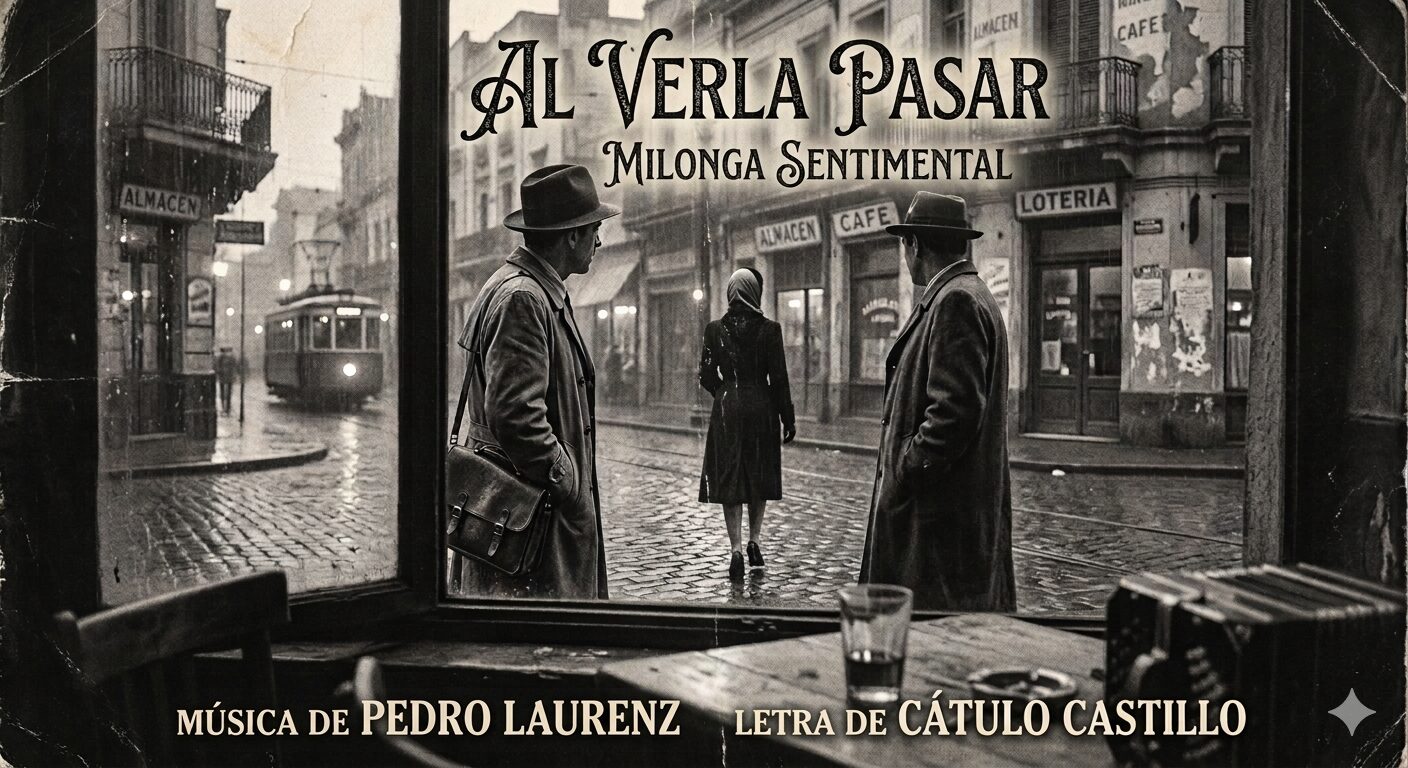
Pedro Laurenz / Martín Podestá(1942年)
🎵 曲の説明 / About the Song / Sobre la Canción
日本語
「Al Verla Pasar(彼女が通り過ぎるのを見て)」は作曲ホアキン・モラ、作詞ホセ・マリア・コントゥルシによる名曲で、1942年1月7日にペドロ・ロレンス楽団がマルティン・ポデスタの歌声で録音しました。 Hermano Tango
ホセ・マリア・コントゥルシはタンゴ界を代表する作詞家で、「Gricel」「Como dos extraños」「En esta tarde gris」などの傑作を生み出しました。哀愁と失恋の絶望が彼の詩の最も重要なテーマです。 Wikipedia
この曲は偶然街で見かけた昔の恋人の姿に心が揺れる男の物語を描いています。時の流れとともに変わり果てた彼女の姿を見て、全てが終わったことを悟りながらも、胸に込み上げる感情を抑えられない——そんな普遍的な切なさが見事に表現されています。
English
“Al Verla Pasar” (When I Saw Her Pass By) was composed by Joaquín Mora with lyrics by José María Contursi, and recorded by Pedro Laurenz’s orchestra with Martín Podestá’s vocals on January 7, 1942. Hermano Tango José María Contursi was one of the most representative lyricists of tango, creating masterpieces including “Gricel,” “Como dos extraños,” and “En esta tarde gris.” Melancholy and the desperation of lost love are the most recurring themes in his poetry. Wikipedia
Español
“Al Verla Pasar” fue compuesto por Joaquín Mora con letra de José María Contursi, y grabado por la orquesta de Pedro Laurenz con la voz de Martín Podestá el 7 de enero de 1942. Hermano Tango
👤 マルティン・ポデスタについて / About Martín Podestá
日本語
マルティン・ポデスタはロレンス楽団の初期を支えたボーカリストです。アルベルト・ポデスタとは同姓ですが別人で、澄んだ歌声と情感豊かな表現力でロレンスの音楽と見事に調和しました。「Al Verla Pasar」はマルティン・ポデスタの代表的な録音として今も世界中のタンゴファンに愛されています。
English
Martín Podestá was a vocalist who supported Laurenz’s orchestra in its early period. Unrelated to Alberto Podestá despite sharing the same surname, his clear voice and emotionally rich expression harmonized beautifully with Laurenz’s music. “Al Verla Pasar” remains one of Martín Podestá’s most celebrated recordings.
Español
Martín Podestá fue un vocalista que apoyó a la orquesta de Laurenz en su período inicial. Sin relación con Alberto Podestá a pesar de compartir el mismo apellido, su voz clara y rica expresión emocional armonizaba perfectamente con la música de Laurenz.
👤 ホセ・マリア・コントゥルシについて / About José María Contursi
日本語
ホセ・マリア・コントゥルシ(1911年10月31日〜1972年5月11日)はタンゴ界を代表する作詞家で、父パスカル・コントゥルシから作詞の才能を受け継ぎました。「Gricel」「Como dos extraños」「En esta tarde gris」「Sombras nada más」など数多くの名作を生み出しました。 el-recodo.com
コントゥルシの詩において哀愁と失恋の絶望が最も重要なテーマであり、その詩はホアキン・モラ、カルロス・ディ・サルリ、オスバルド・フレスエドなど多くの作曲家と組んで傑作を生み出しました。 el-recodo.com
English
José María Contursi (October 31, 1911 – May 11, 1972) was one of tango’s most representative lyricists, inheriting his talent from his father Pascual Contursi. He created masterpieces including “Gricel,” “Como dos extraños,” “En esta tarde gris,” and “Sombras nada más.” el-recodo.com Melancholy and the desperation of lost love are the most recurring themes in his poetry, and he collaborated with composers including Joaquín Mora, Carlos Di Sarli, and Osvaldo Fresedo to create legendary works. el-recodo.com
Español
José María Contursi (31 de octubre de 1911 – 11 de mayo de 1972) fue uno de los letristas más representativos del tango, heredando su talento de su padre Pascual Contursi. Creó obras maestras incluyendo “Gricel,” “Como dos extraños,” “En esta tarde gris” y “Sombras nada más.” el-recodo.com
🎤 歌詞・原文(スペイン語)/ Letra Original
Ayer al verla pasar me convencí que no es posible volver y comprendí que todo se ha terminado, que somos sombras de aquel pasado.
Con cuánta pena miré lo que creí sería mi salvación… ¡Pobre de mí! Y en esa duda terrible de hablarla o no hablarla mis pasos volví…
Pobrecita, ¡qué vieja y pálida estaba! Sin brillo sus negros ojos miraban… La vida quiso ensañarse con ella… ¡Pensar que fue tan bella y que hoy el mundo la olvida!
Si supiera que yo también he cambiado, que tengo el corazón destrozado, que a veces hasta en matarme he pensado, pues todo, todo, todo ha muerto ya para mí…
Después temblando me fui de aquel lugar con unas ansias tan grandes de llorar… Enloquecido de pena, frío en el alma, hielo en las venas… Y anduve, así, sin saber adónde ir, sintiendo risas y burlas junto a mí. el-recodo.com
📖 日本語訳 / Japanese Translation
昨日、彼女が通り過ぎるのを見て確信した 戻ることはできないと、そして理解した 全ては終わってしまったのだと 私たちはあの過去の影に過ぎないのだと
どれほどの悲しみで見つめたことか 私が救いだと思っていたものを… なんと哀れな私よ! 彼女に声をかけるか、かけないかという あの恐ろしい迷いの中で 私は踵を返した…
かわいそうに、なんと老けて青白くなっていたことか! 輝きを失った黒い瞳で彼女は見つめていた… 人生は彼女を痛めつけたかったのだ… あれほど美しかったのに 今日では世界が彼女を忘れているとは!
私も変わってしまったことを彼女が知ったら 心が粉々に砕けてしまったことを 時には死を考えたこともあると 全てが、全てが、全てが もう私にとっては死んでしまったのだから…
その後、震えながら私はその場を去った 泣きたいという抑えきれない衝動を抱えて… 悲しみに狂い、魂は凍え、血管は氷のように… そしてどこへ行けばいいかも分からずに歩き続けた 笑い声と嘲りを感じながら…
🌍 English Translation
Yesterday when I saw her pass by I became convinced that it’s impossible to go back, and I understood that everything has ended, that we are shadows of that past.
With what sorrow I gazed at what I believed would be my salvation… Poor me! And in that terrible doubt of whether to speak to her or not I turned away…
Poor thing, how old and pale she was! Without shine her dark eyes stared… Life wanted to torment her… To think she was once so beautiful and that today the world forgets her!
If she only knew that I too have changed, that my heart is shattered, that sometimes I’ve even thought of killing myself, for everything, everything, everything has already died for me…
Afterwards I left that place trembling with an enormous longing to cry… Maddened by grief, cold in my soul, ice in my veins… And I walked like that, not knowing where to go, feeling laughter and mockery beside me.
💃 ダンスの特徴 / Dance Characteristics
日本語
「Al Verla Pasar」はロレンス楽団の中でも特に心を揺さぶる一曲です。偶然の再会という普遍的なテーマと、コントゥルシの詩的な歌詞が、ダンサーに深い感情表現を求めます。ロレンスの力強いバンドネオンと、マルティン・ポデスタの抑えた歌声が絶妙に融合し、ミロンガで流れると会場全体が静かな切なさに包まれます。
English
“Al Verla Pasar” is one of the most emotionally moving pieces in Laurenz’s repertoire. The universal theme of an accidental reunion and Contursi’s poetic lyrics call for deep emotional expression from the dancers. Laurenz’s powerful bandoneón and Martín Podestá’s restrained vocals blend beautifully, and when this piece plays at a milonga, the entire venue is wrapped in quiet melancholy.
Español
“Al Verla Pasar” es una de las piezas más emocionalmente conmovedoras del repertorio de Laurenz. El tema universal del reencuentro accidental y la letra poética de Contursi exigen una profunda expresión emocional de los bailarines.

コメント