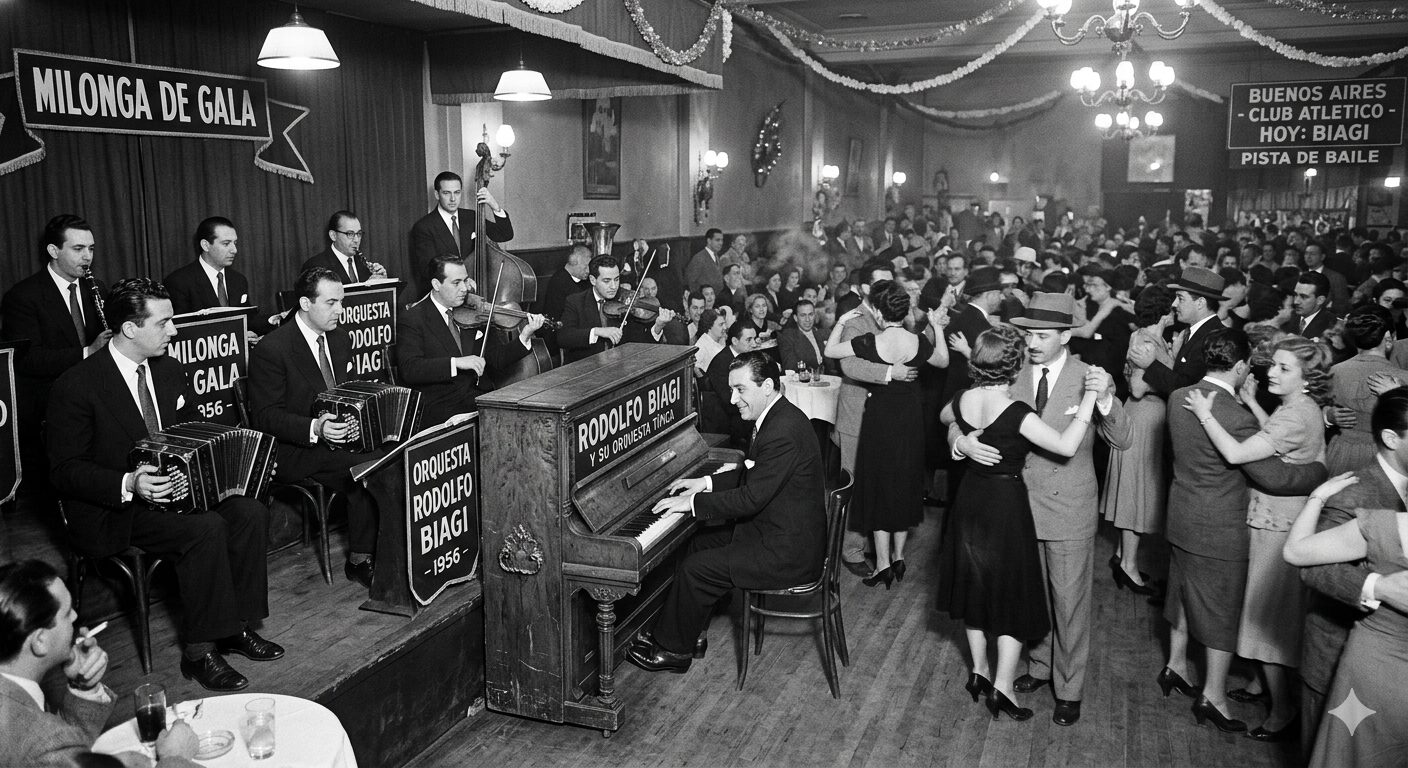
Rodolfo Biagi Orchestra ~Manos Brujas, The Magic Hands~
ビアッジ楽団の紹介〜魔法の手・マノス・ブルハス〜
La Orquesta de Rodolfo Biagi ~Manos Brujas, Las Manos Mágicas~
👑 ロドルフォ・ビアッジとは?
日本語
ロドルフォ・ビアッジ(1906年3月14日〜1969年9月24日)は「マノス・ブルハス(魔法の手)」という愛称で親しまれたアルゼンチンタンゴ界のピアニスト・作曲家・楽団指揮者です。 Hermano Tango
13歳の時に親に隠れて無声映画の伴奏ピアニストとして働き始め、15歳の時に名指揮者フアン・マグリオに才能を見出されました。 Hermano Tango
1935年から1938年までダリエンソ楽団のピアニストを務め、1938年に自身の楽団を結成しました。ダリエンソとともにタンゴのダンス音楽を牽引した存在として今も世界中のタンゴファンに愛されています。 Hermano Tango
English
Rodolfo Biagi (March 14, 1906 – September 24, 1969), nicknamed “Manos Brujas” (Magic Hands), was an Argentine tango pianist, composer, and orchestra leader. At 13, he secretly began working as a silent film pianist, and at 15 his talent was discovered by the great Juan Maglio. He served as pianist in D’Arienzo’s orchestra from 1935 to 1938 before founding his own orchestra. Hermano Tango
Español
Rodolfo Biagi (14 de marzo de 1906 – 24 de septiembre de 1969), apodado “Manos Brujas”, fue un pianista, compositor y director de orquesta de tango argentino. A los 13 años comenzó a trabajar en secreto como pianista de cine mudo, y a los 15 su talento fue descubierto por el gran Juan Maglio. Hermano Tango
📅 年表 / Chronology / Cronología
日本語
- 1906年3月14日 ブエノスアイレス・サン・テルモ地区に誕生
- 1919年(13歳) 親に隠れて無声映画の伴奏ピアニストとしてデビュー
- 1921年(15歳) 指揮者フアン・マグリオに才能を見出される
- 1930年 カルロス・ガルデルの録音に参加
- 1935年 ダリエンソ楽団のピアニストに就任
- 1938年 ダリエンソ楽団を離れ自身の楽団を結成・オデオンレーベルで録音開始
- 1939〜1946年 楽団の黄金期・多数の名録音を制作
- 1942年 チリ公演で前例のない大成功を収める
- 1950年 アルゼンチン初のテレビ局カナル7に初出演
- 1955年 コロンビアレーベルへ移籍
- 1962年 ミュージック・ホールレーベルへ移籍
- 1969年9月24日 急逝。享年63歳
English
- March 14, 1906 Born in San Telmo neighborhood, Buenos Aires
- 1919 (age 13) Secretly debuts as a silent film pianist
- 1921 (age 15) Discovered by conductor Juan Maglio
- 1930 Participates in recordings with Carlos Gardel
- 1935 Joins D’Arienzo’s orchestra as pianist
- 1938 Leaves D’Arienzo and forms his own orchestra
- 1939-1946 Golden era of the orchestra
- 1942 Unprecedented success in Chile
- 1950 First orchestra to appear on Argentina’s new Canal 7 TV
- September 24, 1969 Passes away suddenly at age 63
Español
- 14 de marzo de 1906 Nace en el barrio de San Telmo, Buenos Aires
- 1919 (13 años) Debuta secretamente como pianista de cine mudo
- 1921 (15 años) Descubierto por el director Juan Maglio
- 1930 Participa en grabaciones con Carlos Gardel
- 1935 Se une a la orquesta de D’Arienzo como pianista
- 1938 Deja a D’Arienzo y forma su propia orquesta
- 1939-1946 Época dorada de la orquesta
- 24 de septiembre de 1969 Fallece repentinamente a los 63 años
🎹 音楽的特徴 / Musical Characteristics
日本語
ビアッジのピアノ演奏は非常に独創的で予測不可能なスタイルが特徴です。ダリエンソが規則正しく安定したリズムを刻むのに対し、ビアッジは不規則で予測できないリズムパターンを持ち、時には不協和音も交えた独自のアレンジを施しました。 Wikipedia
ダンサーを優先した速くリズミカルなスタイルが特徴で、初心者でも踊りやすい感染力のあるリズムを生み出しました。 Hermano Tango
ラジオ・ベルグラーノでの演奏が「マノス・ブルハス(魔法の手)」という愛称の由来となりました。 el-recodo.com
English
Biagi’s piano playing is characterized by a very unpredictable and irregular style. Unlike D’Arienzo’s regular and reliable rhythm, Biagi brings unexpected chords and sometimes even dissonant elements into his piano arrangements, creating a uniquely exciting listening experience. Wikipedia
His style strongly favored the dancer with a fast, rhythmic approach that created an infectious rhythm even beginners could follow. Hermano Tango
Español
El estilo pianístico de Biagi se caracteriza por ser muy impredecible e irregular. A diferencia del ritmo regular y confiable de D’Arienzo, Biagi incorpora acordes inesperados y a veces elementos disonantes en sus arreglos de piano. Wikipedia
🎤 ボーカリストの変遷 / Vocalists
日本語
| 期間 | ボーカリスト | 特徴 |
|---|---|---|
| 1938〜1939年 | テオフィロ・イバニェス | 楽団最初の歌手 |
| 1939〜1940年 | アンドレス・ファルガス | 初期の人気歌手 |
| 1940〜1945年 | ホルヘ・オルティス | 最多録音・楽団を代表する歌声 |
| 1940年代 | アルベルト・アモール | 情感豊かな表現力 |
| 1943〜1949年 | カルロス・アクーニャ | 深みのある歌声 |
| 1950〜1969年 | ウゴ・ドゥバル | 晩年まで楽団を支えた名歌手 |
English
| Period | Vocalist | Feature |
|---|---|---|
| 1938-1939 | Teófilo Ibáñez | First vocalist of the orchestra |
| 1939-1940 | Andrés Falgás | Popular early vocalist |
| 1940-1945 | Jorge Ortiz | Most recordings, representative voice |
| 1940s | Alberto Amor | Rich emotional expression |
| 1943-1949 | Carlos Acuña | Deep resonant voice |
| 1950-1969 | Hugo Duval | Distinguished singer until dissolution |
Español
| Período | Vocalista | Característica |
|---|---|---|
| 1938-1939 | Teófilo Ibáñez | Primer vocalista de la orquesta |
| 1939-1940 | Andrés Falgás | Popular vocalista inicial |
| 1940-1945 | Jorge Ortiz | Más grabaciones, voz representativa |
| 1940s | Alberto Amor | Rica expresión emocional |
| 1943-1949 | Carlos Acuña | Voz profunda y resonante |
| 1950-1969 | Hugo Duval | Distinguido cantante hasta la disolución |
🎵 代表曲 / Representative Works
日本語
| 曲名 | 種類 | 特徴 |
|---|---|---|
| Indiferencia | ホルヘ・オルティス | ビアッジの代名詞的名曲 |
| Campo afuera | 器楽 | オメロ・マンシ作詞のミロンガ |
| Gólgota | 声楽 | 劇的な表現が印象的 |
| Yuyo verde | ホルヘ・オルティス | 楽団の人気曲 |
| Pájaro ciego | ホルヘ・オルティス | 情感豊かな名曲 |
| Cruz diablo | 器楽 | ビアッジ作曲の器楽代表作 |
English
| Song Title | Type | Feature |
|---|---|---|
| Indiferencia | Jorge Ortiz | Biagi’s signature masterpiece |
| Campo afuera | Instrumental | Milonga with lyrics by Homero Manzi |
| Gólgota | Vocal | Dramatically expressive piece |
| Yuyo verde | Jorge Ortiz | Popular orchestra favorite |
| Pájaro ciego | Jorge Ortiz | Emotionally rich masterpiece |
| Cruz diablo | Instrumental | Representative instrumental composition |
Español
| Título | Tipo | Característica |
|---|---|---|
| Indiferencia | Jorge Ortiz | Obra maestra característica de Biagi |
| Campo afuera | Instrumental | Milonga con letra de Homero Manzi |
| Gólgota | Vocal | Pieza dramáticamente expresiva |
| Yuyo verde | Jorge Ortiz | Favorito popular de la orquesta |
| Pájaro ciego | Jorge Ortiz | Obra maestra emocionalmente rica |
| Cruz diablo | Instrumental | Composición instrumental representativa |
🎬 カルロス・ガルデルとの縁 / Connection with Carlos Gardel
日本語
1930年、ビアッジはカルロス・ガルデルの録音セッションに参加し、「ビエホ・スモーキング」「ブエノスアイレス」などの曲を録音しました。その才能に感銘を受けたガルデルはスペイン公演への同行を誘いましたが、ビアッジはこれを断りました。 Hermano Tango
English
In 1930, Biagi participated in recording sessions with the legendary Carlos Gardel, recording songs including “Viejo Smoking” and “Buenos Aires.” So impressed was Gardel that he invited Biagi to join him on a Spanish tour — but Biagi declined. Hermano Tango
Español
En 1930, Biagi participó en sesiones de grabación con el legendario Carlos Gardel, grabando canciones como “Viejo Smoking” y “Buenos Aires.” Tan impresionado quedó Gardel que invitó a Biagi a unirse a él en una gira española, pero Biagi declinó. Hermano Tango
💃 ダンサーへのメッセージ / Message for Dancers
日本語
ビアッジの音楽はダリエンソ同様、ダンサーにとって非常に踊りやすい楽団として知られています。速くリズミカルなピアノが全身を自然に動かし、初心者から上級者まで楽しめる音楽です。特にIndiferenciaやYuyo verdeはミロンガで流れると会場全体が活気づく定番曲です。
English
Like D’Arienzo, Biagi’s music is celebrated as one of the most dancer-friendly orchestras in tango. The fast and rhythmic piano naturally moves the whole body, making it enjoyable for dancers of all levels. Indiferencia and Yuyo verde in particular are classics that energize the entire milonga when played.
Español
Al igual que D’Arienzo, la música de Biagi es reconocida como una de las más amigables para los bailarines en el tango. El piano rápido y rítmico mueve naturalmente todo el cuerpo, haciéndola disfrutable para bailarines de todos los niveles.

コメント